On this page
1. Getting started 2. Accounts 3. Transactions & recurring items 4. The Plan tab: timeline & shortfall warnings 5. Budgets 6. Sync & your account 7. Your data: export, import, CSV 8. FAQ1. Getting started
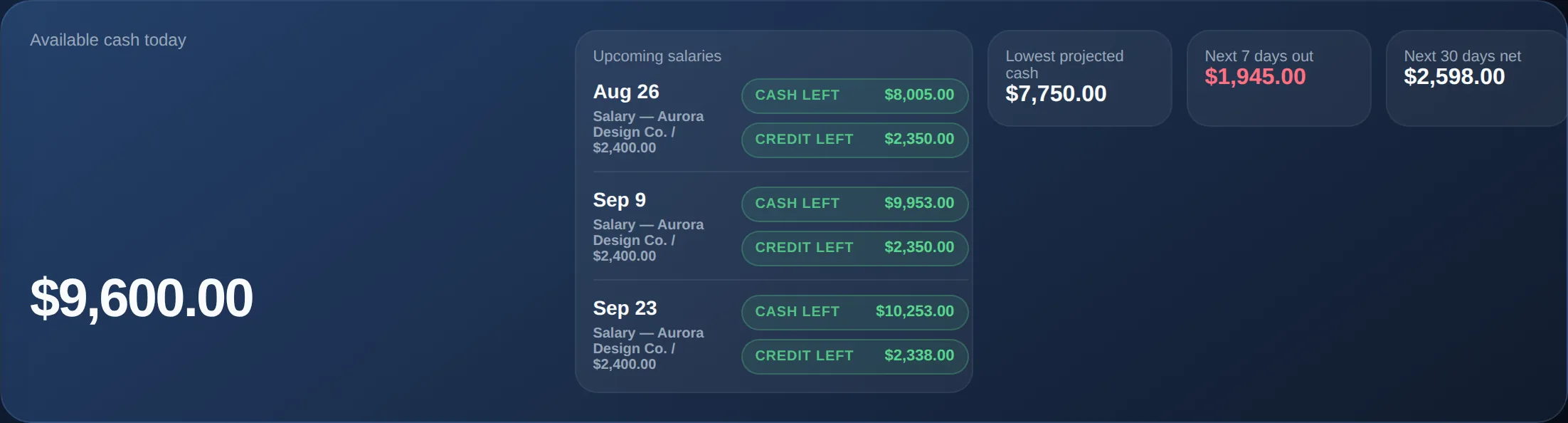
Open the app (or create an account first if you want your planner to sync across devices). The app opens on the Plan tab, which is the home screen: your available cash, upcoming salaries, your lowest projected balance, and the cash-flow timeline itself. It starts empty — the first thing worth doing is adding your real accounts under the Accounts tab, then a handful of your actual recurring bills and income under Plan → Add new. The projections and warnings only get useful once your real numbers are in.
You don't need an account to try NeverRunShort — everything works fully offline, saved only on your device, from the moment you open it. Creating an account (email/password or Google) is only needed if you want the same planner on your phone and your computer.
2. Accounts
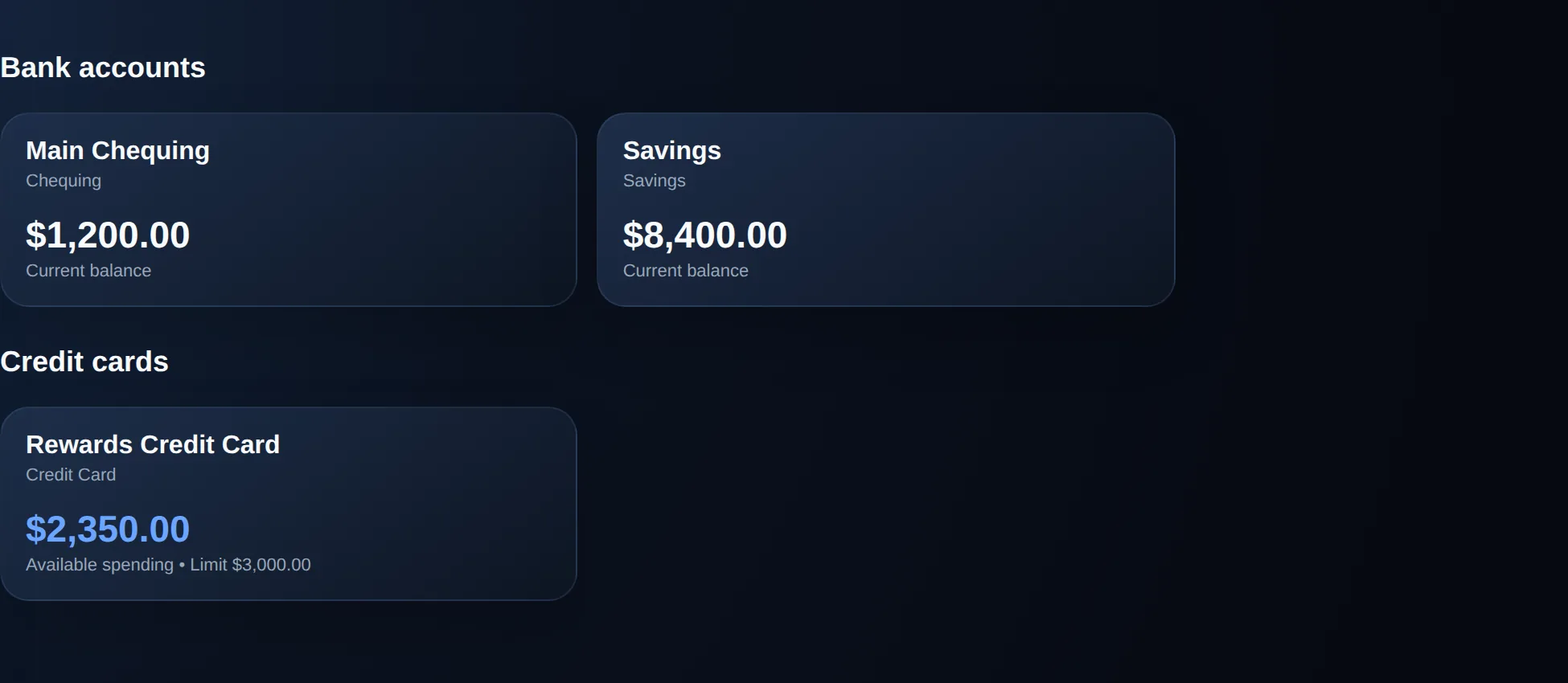
Under the Accounts tab, add each account you actually use: chequing, savings, cash, or a credit card. Bank and cash-type accounts track a current balance. Credit cards track the amount currently owed, plus a credit limit, so NeverRunShort can show you available spending room and warn you before a card would be maxed out by a planned charge.
The hero number at the top of the Plan tab — Available cash today — is the sum of every non-card account. That's deliberate: it answers "how much can I actually spend right now," pooled across accounts. It is not the same as any one account being safe — see the next section for why that distinction matters.
3. Transactions & recurring items
Every transaction is one of three types:
- Income — money landing in an account (a paycheque, a refund, other income).
- Expense — money leaving an account, tagged with a category for budgeting.
- Transfer — money moving between two of your own accounts.
Any of these can repeat: weekly, biweekly, semimonthly, monthly, or yearly. When you create a recurring item, NeverRunShort immediately generates the individual future occurrences (rather than recalculating them every time), so each one shows up on the timeline as its own entry and can be individually edited, moved, marked done, or deleted without touching the rest of the series. If you leave Number of times blank, the series is treated as ongoing and keeps generating new occurrences into the future as your planning horizon moves forward; if you set a specific count, the series has a fixed end.
A transaction can be marked planned or paid (completed). Completed items still count as real activity that already happened, even if you later exclude that item's future schedule from projections.
4. The Plan tab: timeline & shortfall warnings
The cash-flow timeline lists every income, expense, and transfer in date order, out to your chosen planning horizon (30, 90, or 180 days). You can filter it — all items, just income, just expenses, just shortfalls, or included/excluded only — without changing any of the underlying totals or projections; the filter only changes which rows are visible.
This is where NeverRunShort's core feature lives: per-account shortfall warnings. While the hero "Available cash today" number is pooled across every account, the warnings are calculated per account — NeverRunShort simulates each account's own running balance day by day and flags the exact date it would go negative, shown as a red-bordered timeline entry and a "Need $X in [account] before [date]" chip. A bill can be perfectly affordable in total and still bounce, if it's scheduled to come out of the one account that's tight — that's exactly the situation these warnings catch.

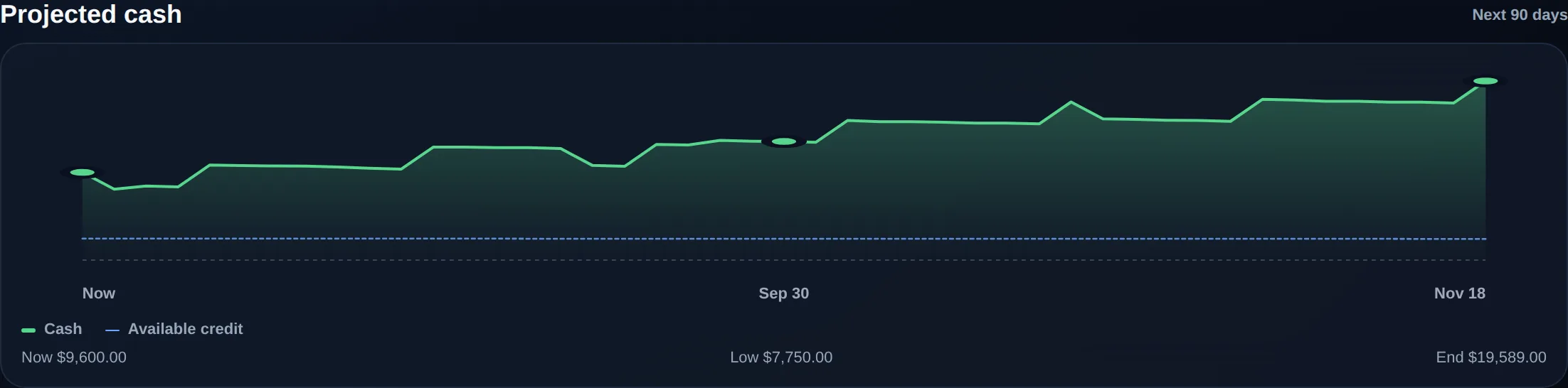
The Projected cash chart plots your pooled cash (and available credit) forward across the horizon; drag or tap across it to scrub through exact daily values.
One nuance worth knowing: an item you've excluded from your plan stays visible on the timeline (so you don't lose track of it) but doesn't affect any totals, charts, projections, or warnings. Extending your planning horizon later doesn't retroactively add more occurrences to an already-generated recurring series — if you want a longer runway for an existing recurring item, recreate it with the new horizon in mind.
5. Budgets
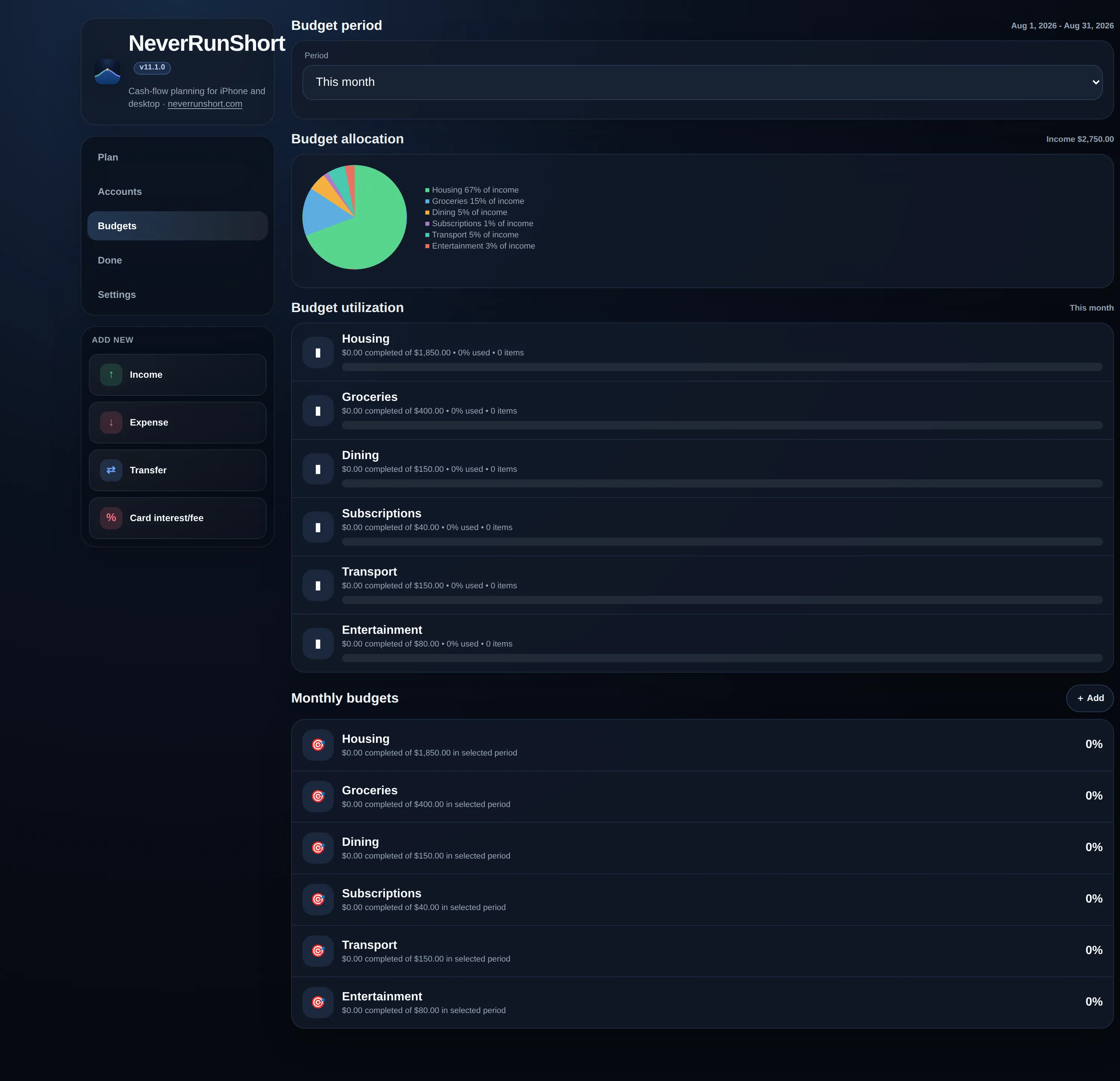
Set a monthly amount per category under the Budgets tab, then choose the period you want to measure against — this month, last month, the last 30 days, this year, or a custom date range. NeverRunShort prorates the monthly target correctly for whatever period you pick, including odd ranges that straddle a month boundary, so a 7-day custom window is measured against roughly a week's worth of budget, not a full month's. Tap a budget's utilization bar to see the completed transactions behind it.
6. Sync & your account
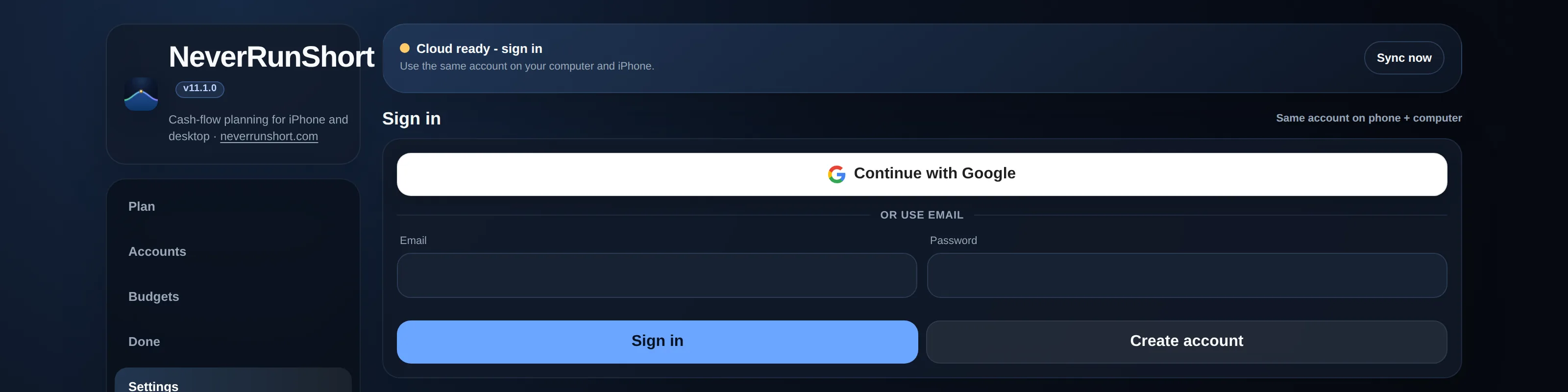
By default your planner lives only in this browser, on this device. Creating a free NeverRunShort account turns on sync: the same planner, kept up to date automatically on every device you sign into. Sign up or sign in from the get-started page with email/password or with Google — either way, edits save to your device immediately and sync in the background within a couple of seconds whenever you're online.
If two devices are edited offline at the same time, NeverRunShort warns you before overwriting: you'll be asked to confirm before one device's version replaces the other's, rather than silently losing changes. Your account is private to you — there's no shared or collaborative planner, only individual accounts.
7. Your data: export, import, CSV
From Settings, you can export a full JSON backup of your entire planner at any time, and import one back in (with a confirmation step, so a bad file can't silently overwrite your data). You can also export your transactions as CSV to open in Excel or Google Sheets. There's no lock-in: your data leaves in a plain, readable format whenever you want it.